Differences between Chinese New Year and Lunar New Year
On Saturday, February 10, the new lunar year will be celebrated. The 15-day festivities end with the Chinese Lantern Festival. In Chinese tradition, each year is represented by one of 12 different animals of the Chinese zodiac. In 2024, we will transition from the Year of the Rabbit to the Year of the Dragon. What does this mean? We have compiled what you need to know.
Are „Lunar New Year“ and „Chinese New Year“ the same?
Although some people use the two terms interchangeably, there is a difference. Chinese New Year is often referred to as the Spring Festival in China, as it symbolizes the end of winter and the beginning of spring. It is one of the four major traditional festivals in the country and celebrates the start of the new year according to the Chinese lunar calendar. Considering the New Year celebrations to honor Chinese traditions and culture, it can be called Chinese New Year. However, many East and Southeast Asian countries also celebrate the same holiday, and the festivities vary by culture. Lunar New Year is a more general term that encompasses all events determined by the lunar calendar to celebrate the new year. In other countries, the term Lunar New Year is preferred over Chinese New Year or the Spring Festival. Those who reject this term in China argue that the origin of the holiday is based on the Chinese lunisolar calendar (based on the cycles of the moon and sun) and China’s historical influence on the countries in the region. Therefore, the choice of wording can lead to controversies.
Where is the new lunar year celebrated?
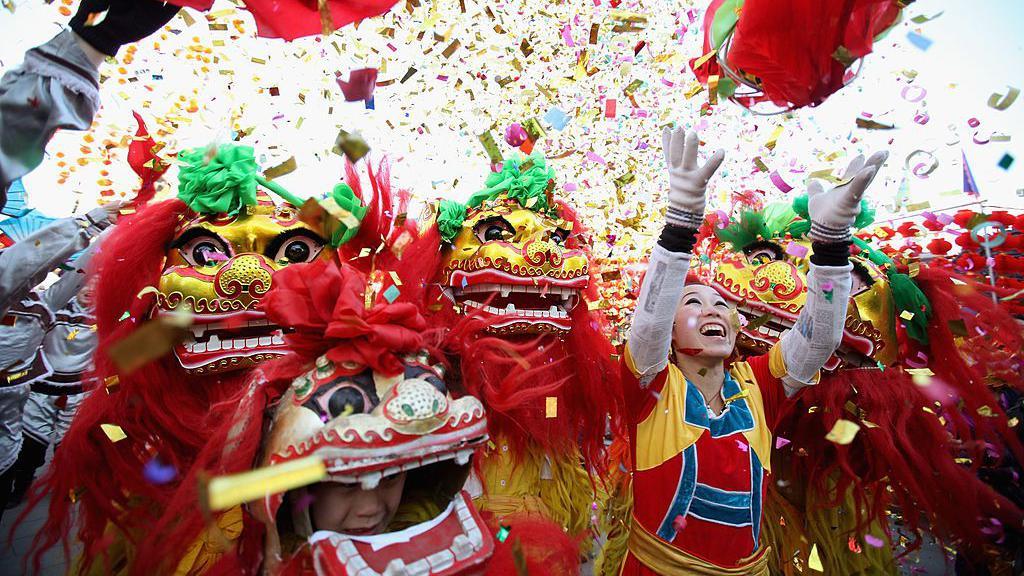
More than 1.5 billion people around the world will celebrate the new lunar year this year. During this time, the world’s largest migration occurs each year as millions of people travel to ring in the new year with their families or friends. In Vietnam, this day is called „Tet Nguyen Dan“ or simply „Tet,“ which means the first morning of the first day festival. In North Korea and South Korea, people celebrate Seolla. In Mongolia, the festival is called „Tsagaan sar“; some also refer to it as the „Festival of the White Moon.“ In the days leading up to New Year, Chinese families conduct spring cleaning in their homes. The aim of the cleaning is to sweep away misfortune and prepare the spaces for the entry of good luck. Families and friends gather to eat Chinese noodles, dumplings, rice cakes, radish cakes, fish, and mandarins, which are believed to bring luck for the coming year. People also watch fireworks, wear special clothing, and hang red lanterns to celebrate the new year. During the new lunar year, it is also customary to give friends and family a bright red envelope (known as „Hongbao“) containing money, symbolizing good wishes and luck for the new year.
A family celebrates the Chinese New Year in 1999
How long do the Chinese New Year holidays last?
The date of the new year is determined by the lunar calendar. It falls on the second new moon after the winter solstice on December 21, usually between January 21 and February 20. The celebrations typically last 15 days. It starts on the day of the new moon and lasts until the next full moon. This year, the Chinese State Council scheduled the Spring Festival holiday for a total of eight days, between February 10 and 17. The day before Chinese New Year is not included in the holiday calendar, but employers are encouraged to grant their employees paid leave on that day.
Origins of Chinese New Year
Chinese New Year was celebrated in 1000 BC during the Shang Dynasty. It is believed to date back to the 14th century, and its origins are full of legends. According to Chinese mythology, its origin traces back to a battle against a monster named Nian (which means „year“ in Chinese). Nian comes to threaten the villagers on the first day of the new year. However, the villagers discover that Nian is afraid of loud noises, bright lights, and the color red. For this reason, the villagers hang red lanterns every new year and use fireworks to scare Nian away. Nian does not reappear.
This year’s Chinese New Year animal is a Dragon
In Chinese tradition, each lunar year is represented by one of the twelve different animals of the Chinese zodiac: Rat, Ox, Tiger, Rabbit, Dragon, Snake, Horse, Goat, Monkey, Rooster, Dog, and Pig. Each animal is associated with an element: Metal, Wood, Water, Fire, and Earth. It also names each year every 12 years. 2024 marks the transition from the Year of the Rabbit to the Year of the Wood Dragon. The Year of the Wood Dragon occurs only every 60 years. The last time the Year of the Wood Dragon was celebrated was in